



This master’s thesis focuses on the analysis and optimization of usability in a self-service portal within the energy sector, with a particular emphasis on accessibility and user-centered UX improvements.
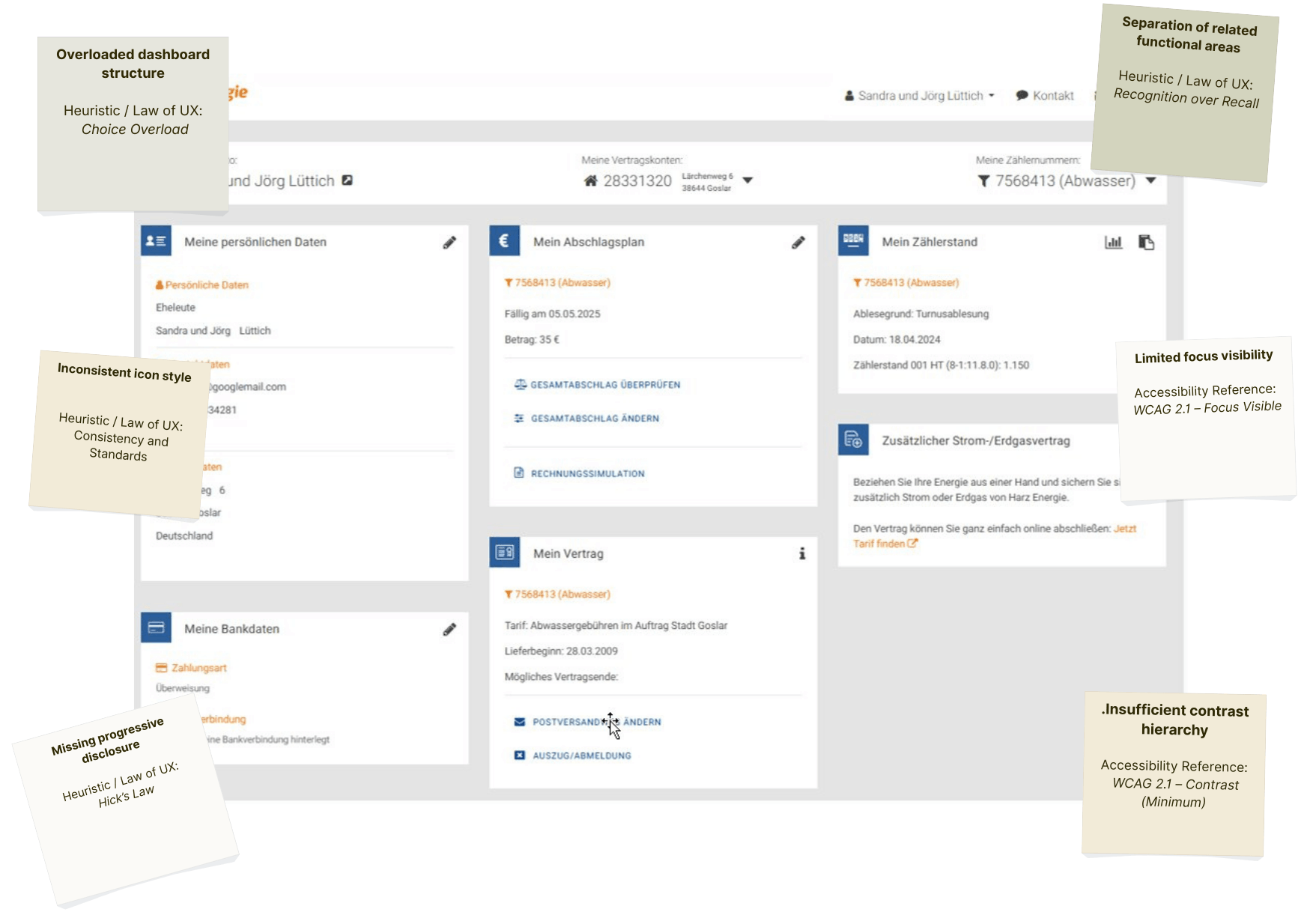
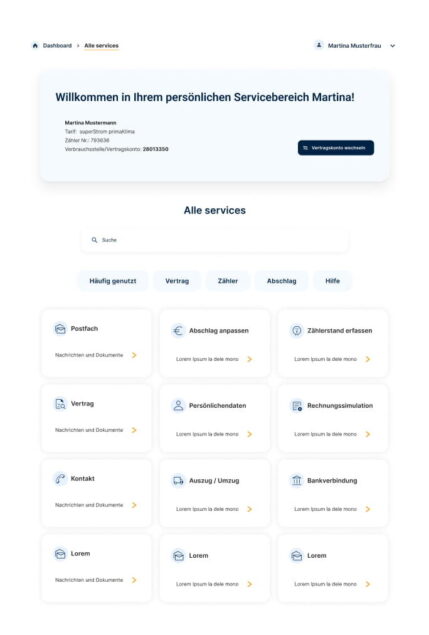
This master’s thesis examines the usability of an existing self-service portal in the energy sector. The starting point was the portal “CP 2”, which showed several deficiencies, including overloaded interfaces, limited accessibility, and a lack of productive usage data.
The primary objective of the thesis was to identify central usability issues, derive improvement potentials while considering accessibility standards, and develop a flexible white-label concept suitable for different energy providers.
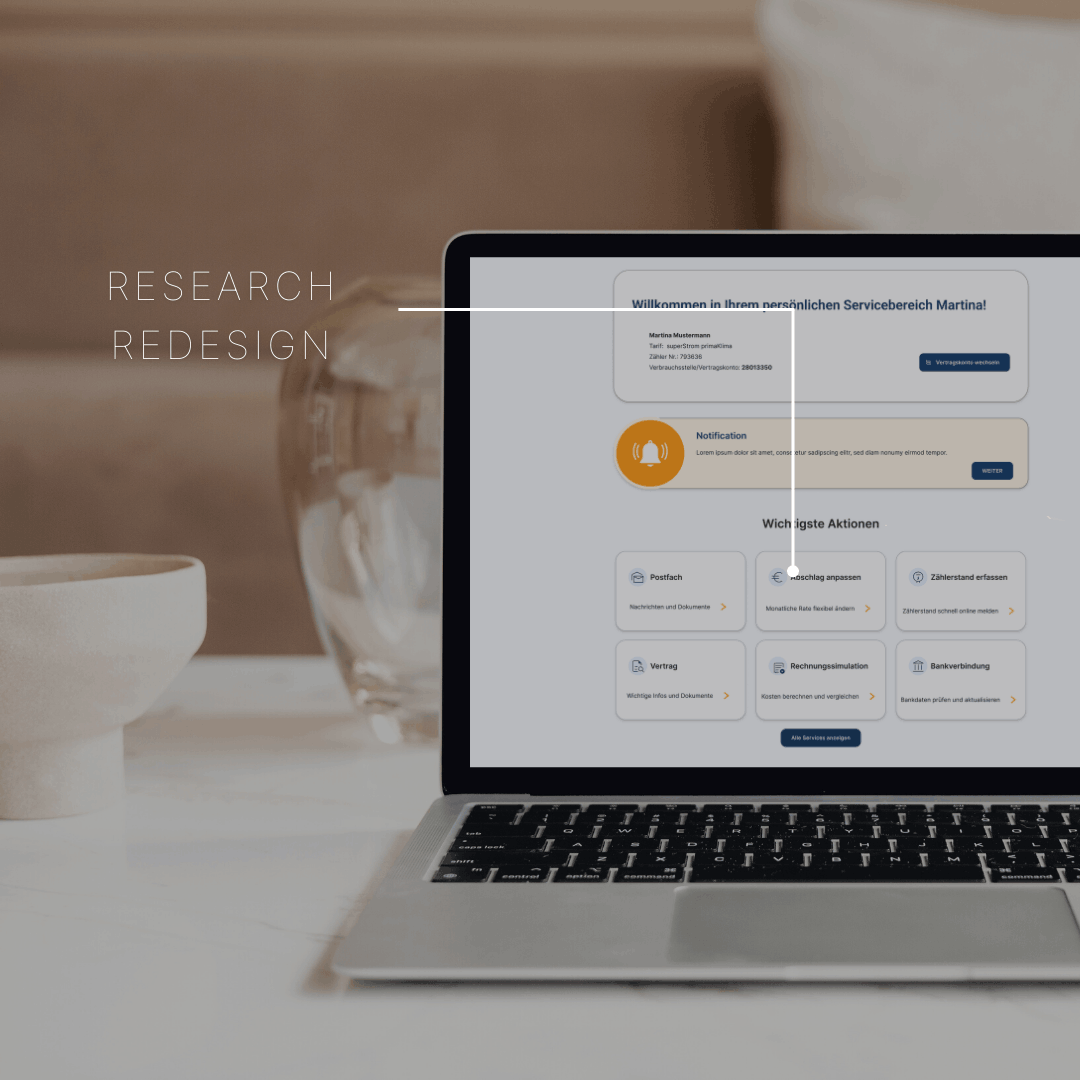
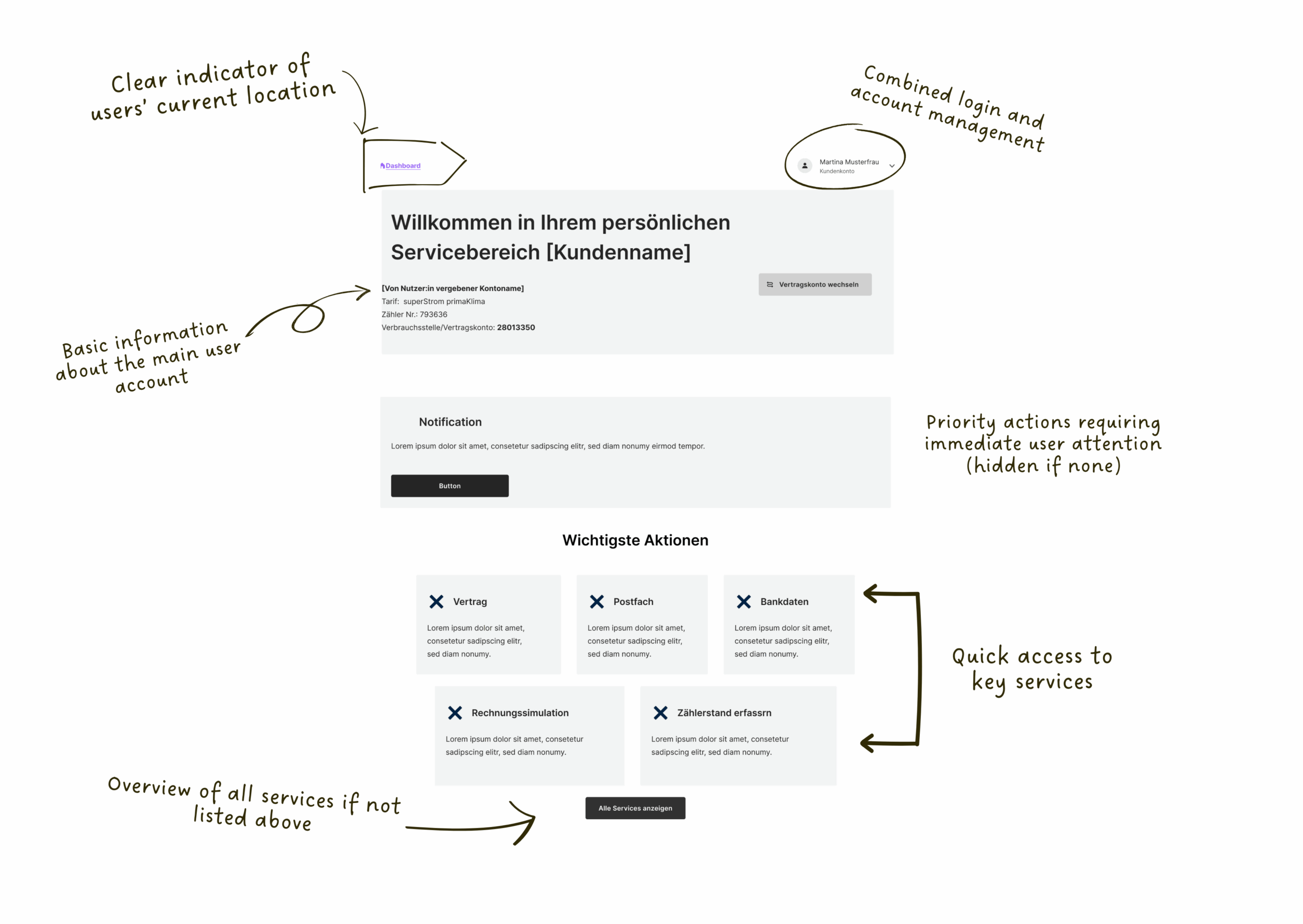
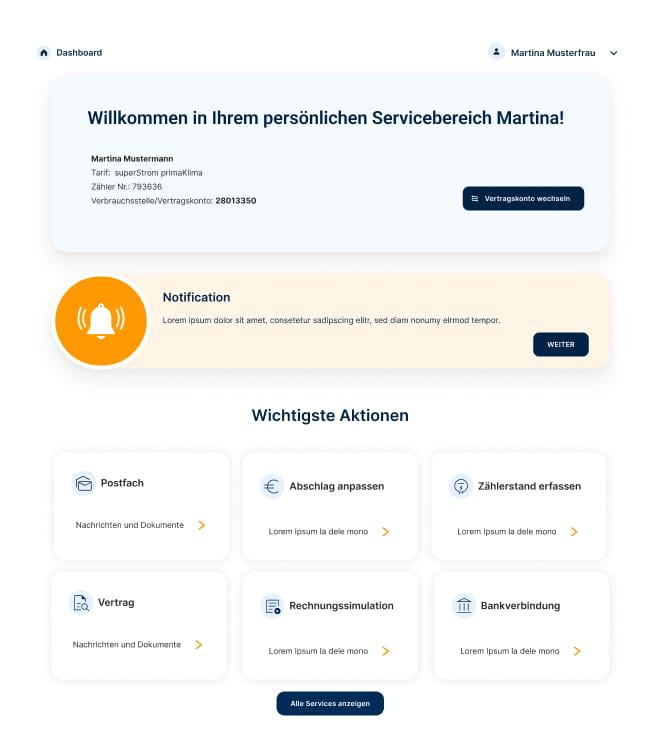
The project resulted in the iterative development of a redesigned portal version (“CP 3”), focusing on clearer structures, step-by-step workflows, consistent terminology, and improved accessibility.
Germany,Bayern
Self-Service Portal
in the Energy Sector
UX Research & UI Concept
6 Month
15 Apr 2022


The thesis followed an iterative, user-centered process combining heuristic evaluations, usability testing, and norm-based accessibility assessments.
“Amazing looking theme and instantly turns your application into a great looking one. Really shows that pro_ fessionals built this theme up. Very happy with the way the theme looks .”
The redesigned portal was developed in two prototype iterations and evaluated with eleven participants using standardized usability instruments, including the Single Ease Question (SEQ) and UMUX-LITE.
As no productive analytics data were available at the time of the study, alternative qualitative and evaluative methods were applied to identify usability issues and to establish a foundation for future data-driven analyses.
The final portal version (“CP3”) demonstrates clear improvements in navigation, structure, and accessibility.
As no productive analytics data were available at the time of the study, alternative qualitative and evaluative methods were applied to identify usability issues and to establish a foundation for future data-driven analyses.
Multi-page structure instead of overloaded single views
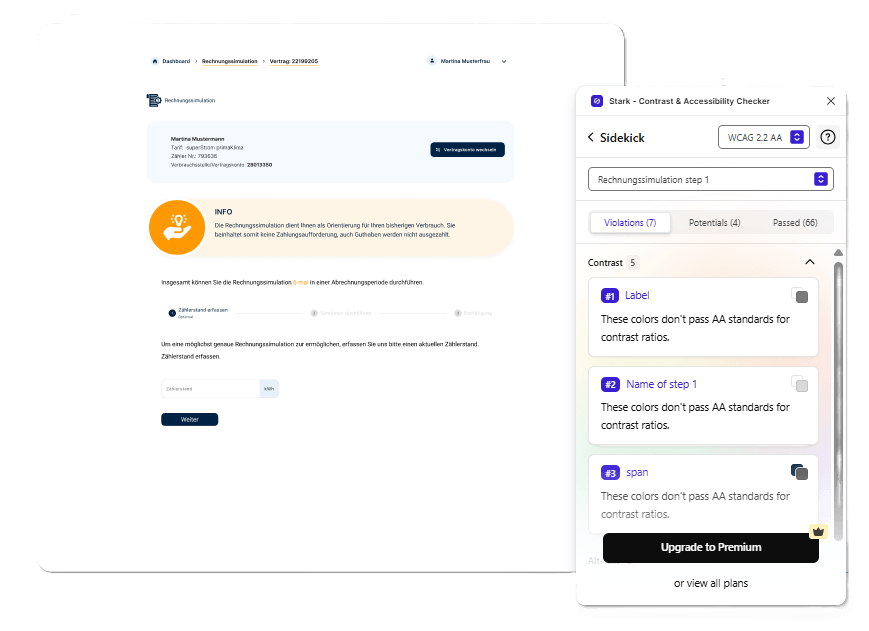
Step-by-step workflows for complex processes
Consistent terminology and clearer system messages
Improved accessibility and contrast handling
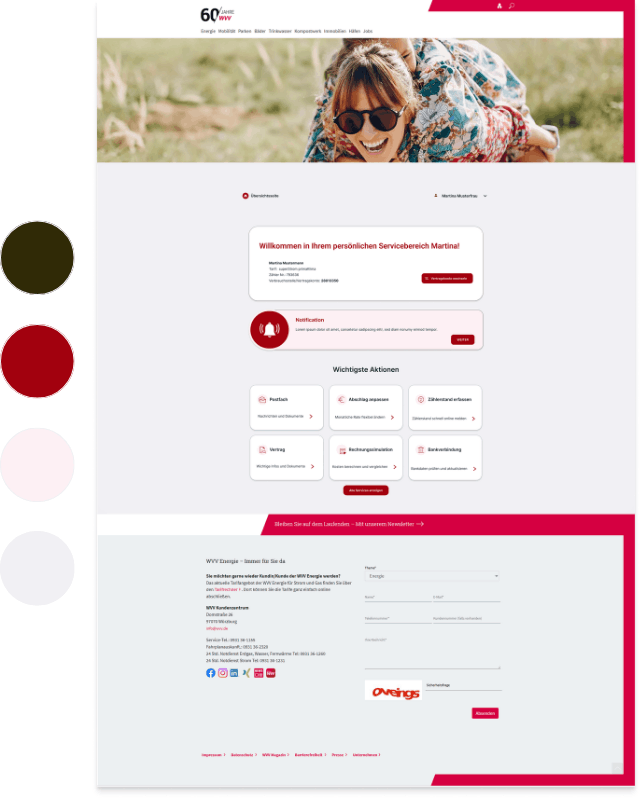
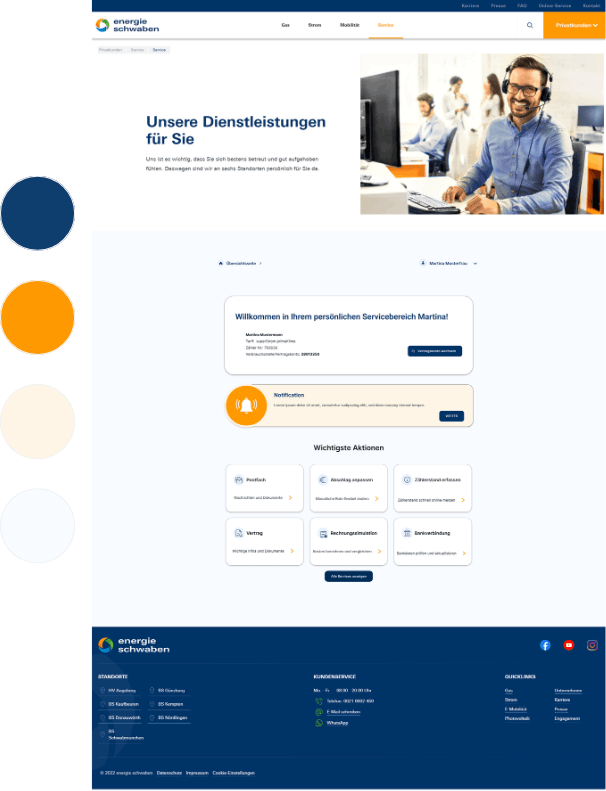
Token-based white-label design enabling flexible brand adaptation